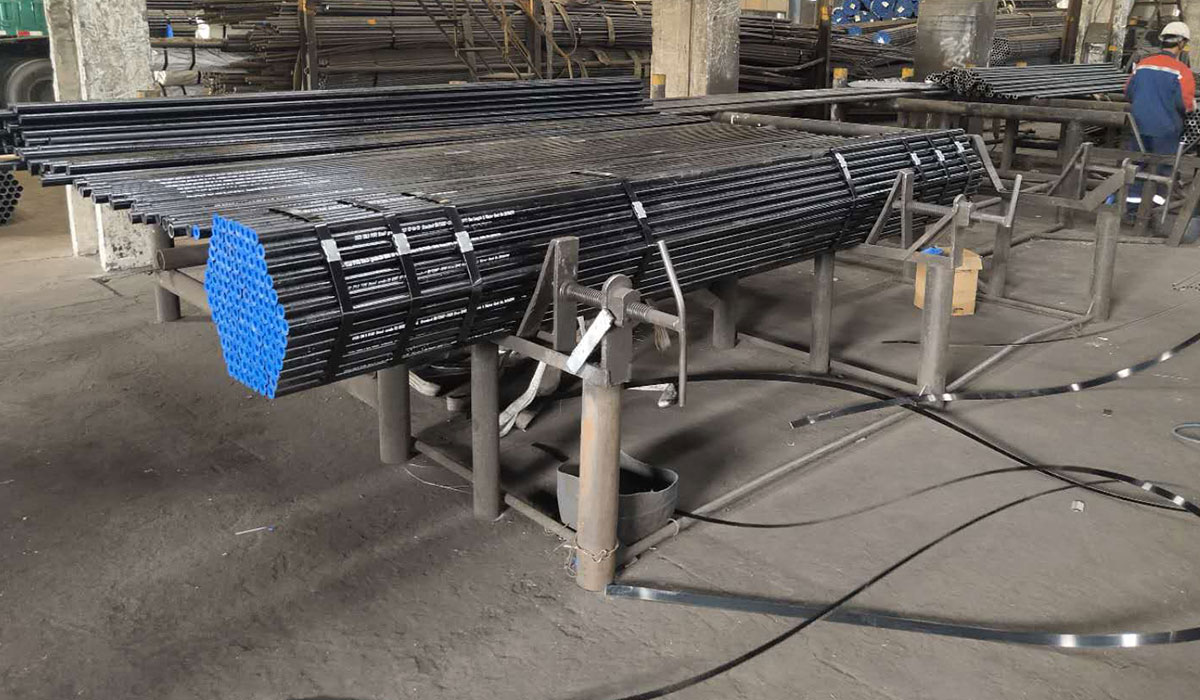
Boiler tubes are a type of steel tubes, and boiler tubes are generally made of seamless tubes. Boiler tubes are pipes used to transport high-temperature and high-pressure fluids. They are commonly used in equipment such as industrial boilers, heat exchangers, and power stations. Boiler tubes have the characteristics of high temperature resistance, high pressure resistance, corrosion resistance, etc., and are one of the most important components of these equipments.
Boiler tubes are usually made of carbon steel, alloy steel, stainless steel and other metal materials. Their quality and performance directly affect the safe operation and energy efficiency of the boiler.
High-pressure boiler tubes belong to the category of seamless steel pipes, such as seamless carbon steel boiler tubes, which have very high requirements on the tightness of the steel pipes.
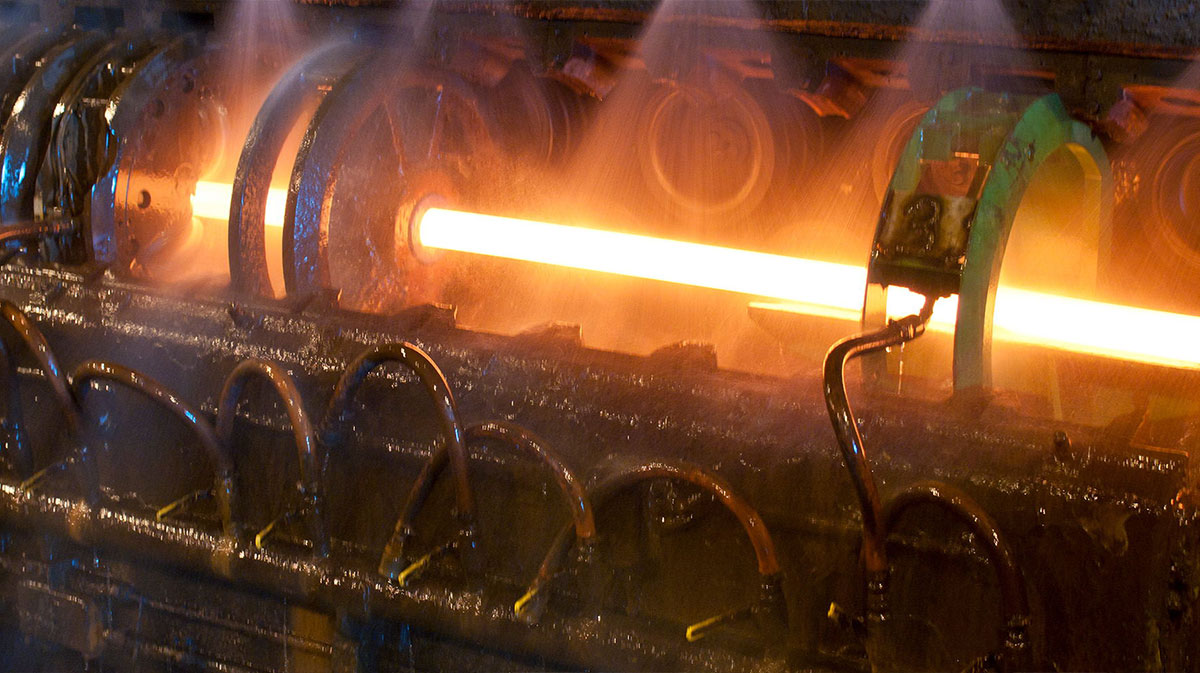
Boiler tubes refer to steel products that are open at both ends and have a hollow section. The ratio of its length to the surrounding area is large. According to the production method, it can be divided into seamless steel tubes and welded steel tubes. Wall thickness indicates a wide range of sizes, from capillary tubes with very small diameters to large-bore tubes up to several meters in diameter. Seamless steel pipes can be used in pipelines, thermal equipment, machinery industry, petroleum geological exploration, containers, chemical industry and special purposes.
Size:
Out diameter (OD) 10.2 - 139.7 mm (from 26.9 mm manufactured as hot rolled)
Wall thickness (WT) 0.5 - 16.0 mm (from 2.6 mm manufactured as hot rolled)
| ASTM A 210 – A&C | Specification for Seamless Medium-Carbon Steel Boiler and Superheater Tubes |
| ASTM A 213 - T-5, T-9, T-11, T-22, T-91 | Specification for Seamless Alloy-Steel Boiler, Superheater and Heat Exchanger Tubes |
Standard&Grade for boiler tubes
| Specifications | Steel Grades |
|---|---|
| ASTM A-210 / ASME SA-210 | Gr. A1; C |
| BS 3059-1 | Gr. 320 |
| BS 3059-2 | Gr. 360; 440; 620; 622; |
| EN 17175 | 16Mo3 |
| EN 10216/1 | P235TR1; P235TR2; P265TR1; P265TR2 |
| EN 10216/2 | P235GHTC1; P235GHTC2; P265GHTC1; P265GHTC2 |
| ASTM A-209 ASTM A-213 ASME SA-213 |
Gr. T1; T11; T12; T22; T5; T9; T91; T92 |
| ASTM A-335 / ASME SA-335 | Gr. P1; P11; P12; P22; P5; P9; P91; P92 |
Shengtian Group has an extensive range of boiler and stay tubes available to meet your boiler tube requirements no matter how demanding.
Chinese National standards
American society of mechanical engineers
American Society for Testing and Materials
ASTM International, formerly known as American Society for Testing and Materials, is an international standards organization that develops and publishes voluntary consensus technical standards for a wide range of materials, products, systems, and services.
Deutsche industrie normen
Deutsche industrie normen
Japanese industrial standards
The SA 213 Tp 304 Material consists of 18% chromium and carbon, manganese, phosphorus, sulfur, silicon and nickel in the composition.
SA213 TP304 is a range of minimum wall thickness pipe series. We supply the SA 213 TP 304 Pipes in different types, shapes and sizes. The SA 213 Tp 304 Material consists of 18% chromium and carbon, manganese, phosphorus, sulfur, silicon and nickel in the composition. There is also the molybdenum, nitrogen, niobium and titanium addition in trace quantities. The SA 213 Tp 304 Density is lower than the ordinary 304 material. It is 7.8 grams per cubic centimeter. We offer ASTM A213 TP 304 for high temperature services. Our 304 Stainless Steel Tube components are of less absolute roughness which means they could be used in high precision equipment and applications.
Austenitic stainless steels are presented in the ASME Boiler and Pressure Vessel Code with two sets of allowable stresses. The reason for this is their relatively low yield strength. The higher allowable stress values were determined at temperatures where the usage would be restricted by the short-time tensile properties.
The higher stresses exceed 62-1/2%, but do not exceed 90% of the yield strength. At these stresses, small amounts of plastic deformation can be expected. These higher stress values are usually used for super-heater and reheater tubing.
The Boiler Code lists maximum allowable stresses for varying temperatures depending on the individual austenitic stainless grade.
Variations of this 18 chromium, 8 nickel grade include 304L, 304LN, 304H and 304N. Each of these offers excellent corrosion and oxidation resistance along with high strength.
High strengths are maintained in the low carbon grades by controlling the nitrogen content.
T304 has higher carbon and a minimum solution annealing temperature to assure good long-time elevated temperature strengths. T304 grades are limited to 1650F under oxidizing conditions. Section I of the ASME Boiler Code lists allowable stresses up to 1500F.
SA213 TP316 Tube is a material standard for heat exchanger tubes that are made from 316 austenitic stainless steel.
The chromium nickel alloy also has molybdenum in its composition which makes it more corrosion resistant and heat resistant than the 304 material. ASME SA213 TP316 is the second most used pipe material in the world next to the 304 material. ASTM A213 TP316 Tube is an austenitic stainless steel but the 213 standard covers both the austenitic and ferritic steels.
Sunny Steel is a supplier of ASTM A213 Grade TP316 products in different standards and sizes. Our 316 Stainless Steel Tube can come with different finishing such as the 316 Stainless Steel Tubing Polished or electropolished. We also provide the pipes in different shapes such the round, rectangular or Stainless Steel 316 Square Tube. The square and 316 Stainless Steel Rectangular Tube is usually used in high pressure applications to withstand the pressure stress at change of directions. The Stainless Steel 316 Seamless Tube is more accurate in dimensions and therefore it is used in high precision applications. Our 316 Stainless Steel Exhaust Tubing is of high quality and can withstand high temperatures; it is used in exhausts, heat exchangers and super heaters. The 316 Stainless Steel Heavy Wall Tubing is used in high pressure applications such as hydraulic systems. Our SS 316 Welded Tube is easy to weld upon. We supply 316 Stainless Steel Welded Tube for affordable prices in different sizes and schedules. Please contact us for further details and pricing.
SA213 TP321 is a specification of heat exchanger tubes that are made from the 321 austenitic stainless steel.
SA213 TP321 is a specification of heat exchanger tubes that are made from the 321 austenitic stainless steel. The SA 213 specifies pipe products for heat exchangers in different material grades, both the ferritic and austenitic steels.
We is a supplier of all kinds of stainless steel pipes. The SA213 Tp321 Material is special in that the composition includes titanium which reduces the density of the ASME SA213 Tp321 and therefore making it lightweight.
T321 and 347 are variations of T304 and have comparable minimum tensile properties. These two grades are stabilized with additions of titanium and columbian respectively, along with proper heat treatment.
To insure good long-time strength at elevated temperatures, T321H and 347H-like 304H-were developed with higher carbon contents and specified minimum solution annealing temperatures.
Of all the stainless steels, T309 (25 chromium, 13 nickel) and T310 (25 chromium, 20 nickel) offer the maximum resistance to oxidation and corrosion. They also offer good high-temperature properties. Since these steels contain ferrite, however, they are more susceptible to sigma phase.
How to choose the right boiler tube?
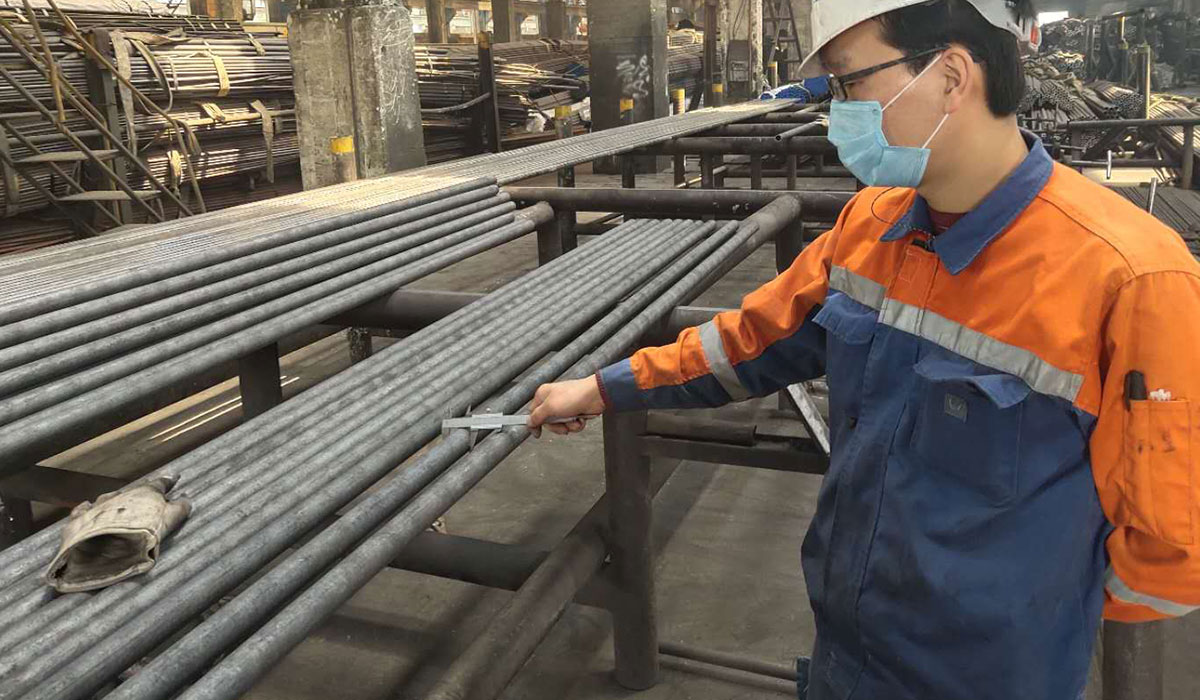
1. Look at the cross-section of the tube. A good quality seamless tube will have a smooth cross-section and will be devoid of bumps and irregularities.
2. Check the density of the pipe to understand the percentage of impurities in the pipe. If the pipe shows low density, steer clear!
3. Check the surface of the boiler tube. A good quality boiler tube will have a smooth surface. If you find the surface to be rough and uneven, you can be sure that the quality is not up to the mark.
Fields of use for Boiler Tubes
Steam Boilers
Fossil Fuel Plants
Heat Exchangers
Electric Power Plants
Cogeneration Facilities
Air Preheater Unit
Waste Heat Plants
Power Generation
Economiser etc